


Cyanuric Acid: Why Your Pool Needs It and How To Balance It

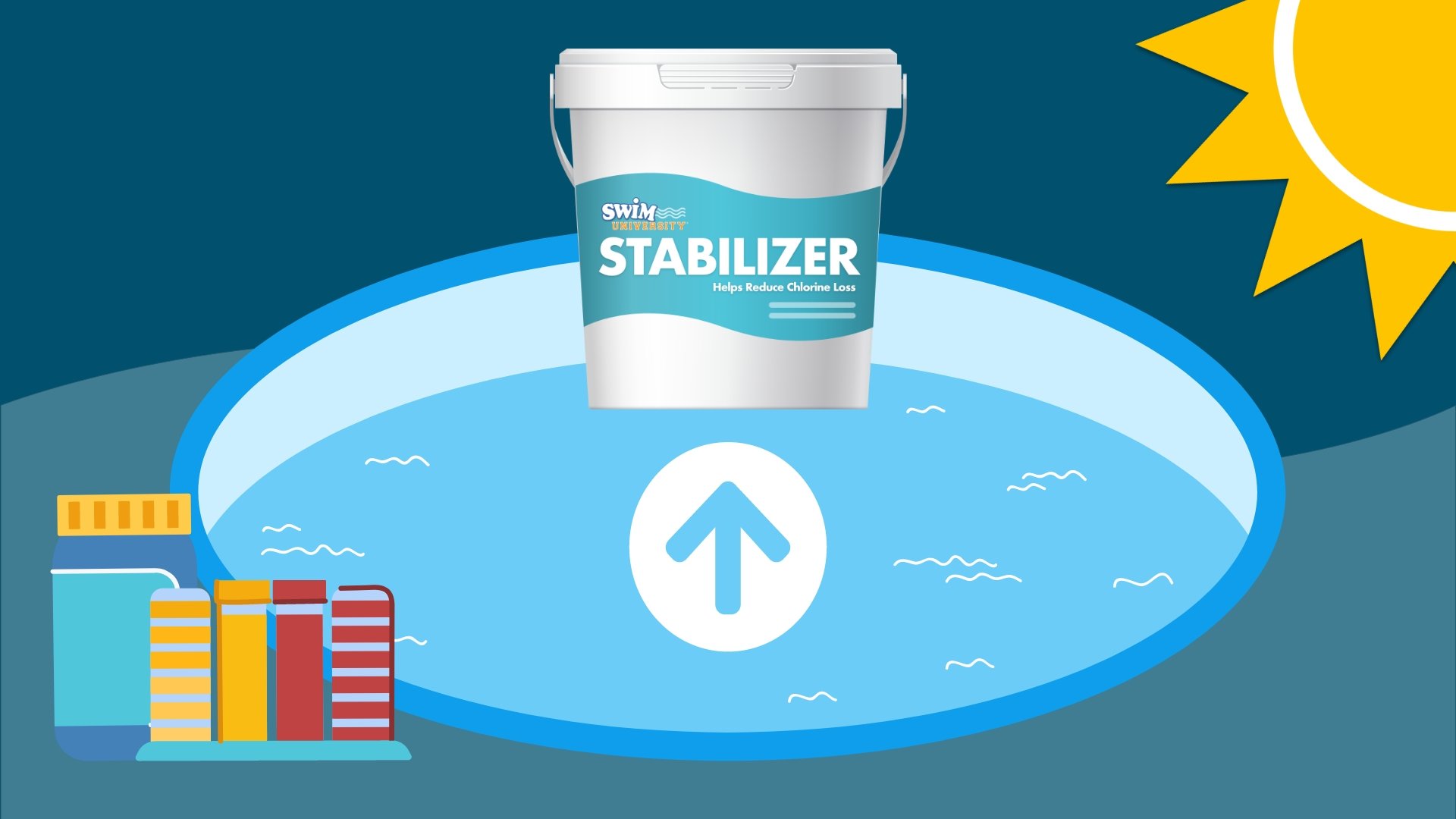
Cyanuric acid, also known as CYA, pool stabilizer, chlorine stabilizer, or pool conditioner, are all the same chemical. CYA protects the chlorine in your pool from the sun.
Without it, your chlorine breaks down fast under UV rays. That leaves your water unprotected, even if you just added a fresh dose of chlorine.
Too little CYA and your chlorine disappears in hours. Too much CYA and your chlorine stops working properly, even though your test strip might still show normal chlorine levels. That’s why getting this one chemical right matters so much.
Here’s everything you need to know about cyanuric acid, including what it does, how much you need, and how to fix it when it’s too high or too low. Watch the video tutorial below, or keep reading for the full step-by-step guide.
Tracking CYA over time matters more than tracking most other pool chemicals, because it doesn’t evaporate or break down on its own. The Pool Care App warns you when you’re reaching unsafe levels.
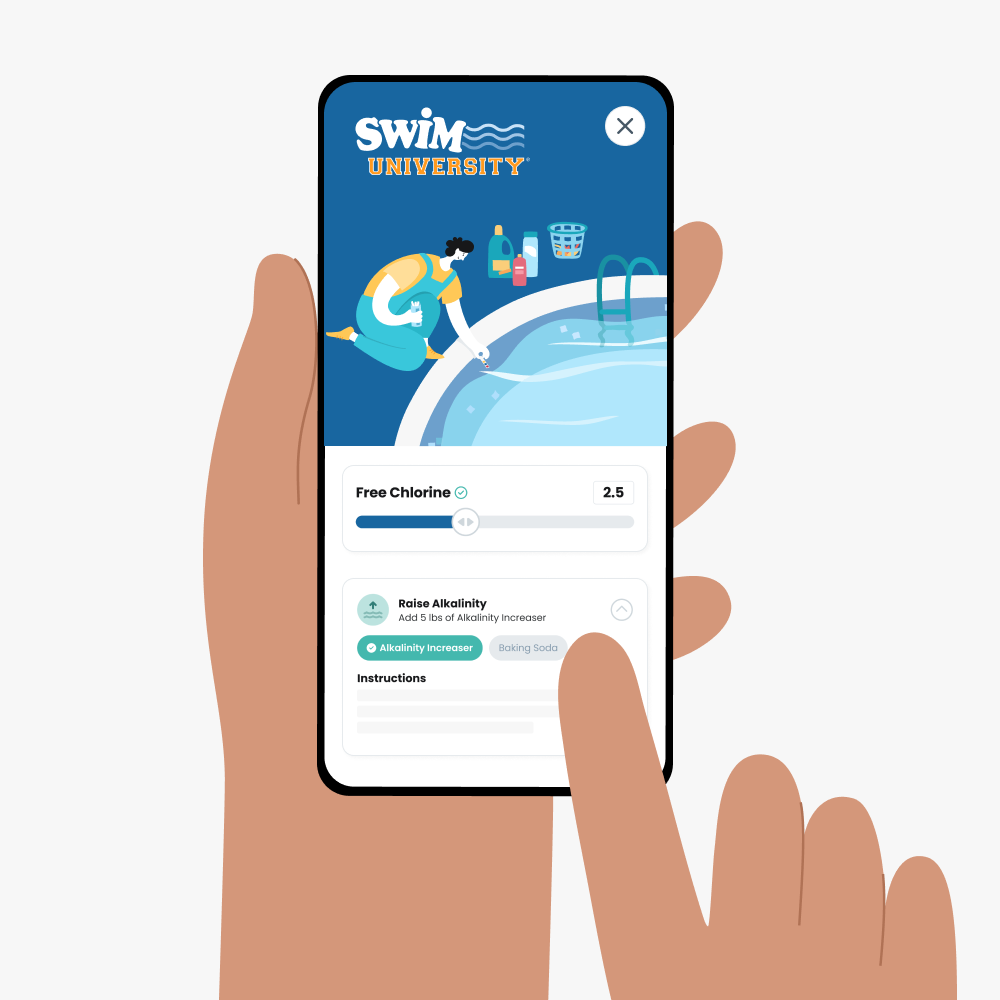
Enter your water test results. Get a custom treatment plan. Know exactly what chemicals to add to keep your pool clear. Saltwater and hot tub compatible.
What Is Cyanuric Acid (CYA)?
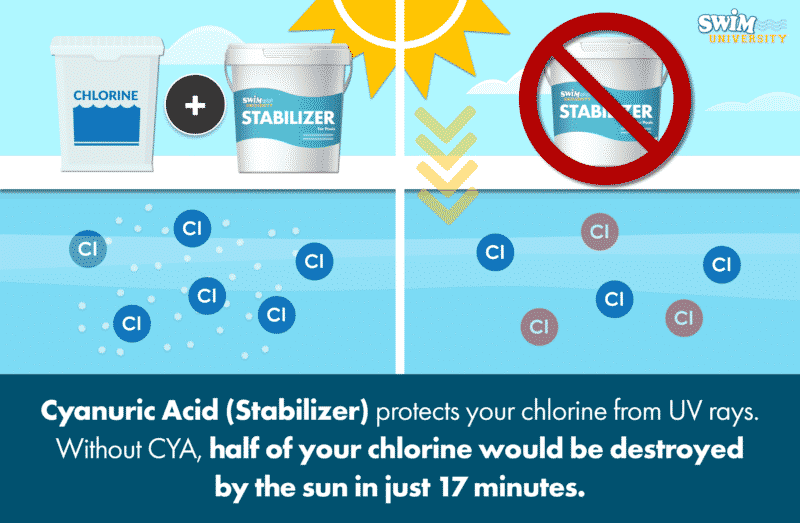
Cyanuric acid is a chemical compound that protects chlorine from breaking down in sunlight. Think of it as sunscreen for your chlorine.
Without CYA, UV rays destroy chlorine in a matter of minutes. In fact, it only takes 17 minutes of direct sun exposure to wipe out half your chlorine. CYA binds loosely to chlorine molecules and releases them slowly, which means your chlorine sticks around 3 to 5 times longer.
The Other Names for Cyanuric Acid
You’ll see this chemical labeled differently depending on what product you buy. That confusion is the most common reason people over-add or under-add cyanuric acid to the water. Here’s the full list, so you never get tripped up again.
- Cyanuric acid: The chemical name. You’ll see this as an ingredient in chlorine tablets or granules.
- CYA: The common shorthand for cyanuric acid.
- Chlorine stabilizer: What you’ll usually see on store shelves if you need to add it to the water separately. It is sold either as a concentrated granular powder (pure cyanuric acid) or as a pre-diluted liquid pool stabilizer.
- Pool stabilizer: A term for the same product as chlorine stabilizer.
- Pool conditioner: An older industry term that still shows up occasionally. It’s the same product as a chlorine stabilizer. Here’s our full guide on pool conditioner.
All five terms point to the exact same chemical. Whether your bottle says stabilizer, conditioner, or CYA, you’re buying the same thing. Just check the label for “cyanuric acid” listed as the active ingredient to be sure.
How Cyanuric Acid Protects Chlorine
If your outdoor pool has no CYA, your chlorine dissipates within a few hours. That leaves your water unsanitized, even if you just shocked it.
Pools with very low or no cyanuric acid run into “chlorine demand.” No matter how much chlorine you add, the levels keep dropping.
Not every pool owner needs to worry about this, though. CYA only matters for outdoor pools or indoor pools that get some sunlight through windows or skylights. Indoor pools with no UV exposure or that use bromine to sanitize their water don’t need CYA.
Ideal Cyanuric Acid Levels for Your Pool
The right CYA level depends on your pool type. Here’s a quick breakdown.
| Pool Type | Ideal CYA Range | Why |
|---|---|---|
| Outdoor chlorine pool | 30 – 50 ppm | Enough UV protection without weakening chlorine. |
| Outdoor saltwater pool | 60 – 80 ppm | Reduces stress on the salt cell and lowers operating costs. |
| Indoor or covered pool (no sun exposure) | 0 ppm | No UV exposure, so stabilizer is unnecessary. |
| Indoor or covered pool (some sun exposure) | 0–20 ppm | Some light UV exposure, so stabilizer can be kept at a low level. |
Traditional outdoor chlorine pools need 30-50 ppm of CYA to protect the chlorine from breaking down in the sunlight. Saltwater pools function better with higher CYA (60-80 ppm). That’s because the salt cell continuously produces chlorine and usually at a higher level (4-5 ppm). The extra CYA also prevents the salt water generator from working so hard.
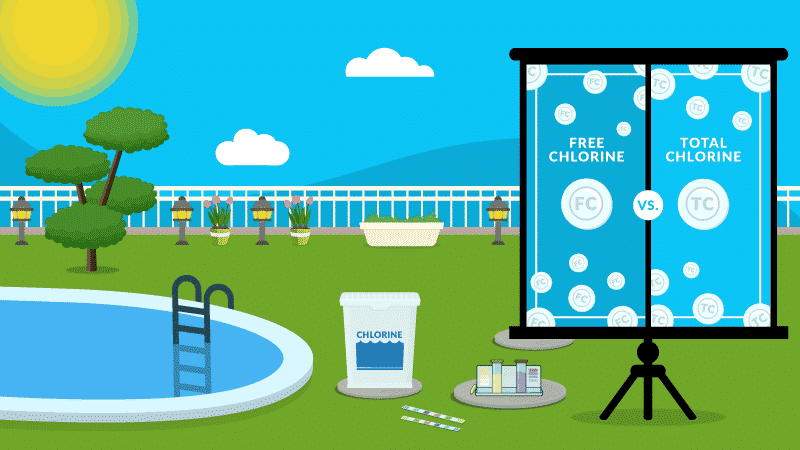
The ratio of CYA to chlorine is what actually determines whether your sanitizer is working. Your free chlorine level should sit at about 7.5 percent of your CYA level. So if your CYA is 40 ppm, you’ll want your free chlorine around 3 ppm.
If your CYA climbs to 100 ppm or higher, your chlorine’s effectiveness drops sharply, and some test strips can’t even give you an accurate reading anymore. To get an accurate reading when your CYA is off the charts, take a water sample to your local pool store, or use a test kit rated up to 300 ppm.
This is the ultimate guide to keeping your pool sparkling clean throughout the year that contains everything you need to know about taking care of your pool the right way. Including saltwater pools.
What is Chlorine Lock?
Chlorine lock, also known as overstabilization, is what happens when your CYA gets too high. Your test strip shows chlorine present, but your water turns cloudy or green anyway. That’s because the chlorine is there, it’s just not working the way it should.
Technically, it’s not a true chemical lock. It’s a free chlorine to CYA ratio problem. When there’s too much CYA compared to chlorine, it overprotects your chlorine and slows down how fast it can react with and kill contaminants
The fix is to bring your CYA back into range and rebalance your free chlorine level. For the full breakdown, see our chlorine lock guide.
How to Test Your Cyanuric Acid Levels
Test your CYA at least once a month, or weekly if you’re using stabilized chlorine products. Most test strips and liquid kits that test for chlorine and pH also include a CYA reading.
Granular CYA can take 24 to 72 hours to fully register on a test after you add it. Don’t add more cyanuric acid or chlorine stabilizer to the water until several days have passed.
Always retest after a heavy rainstorm, too. Rain dilutes your water and can lower your CYA level.
Knowing the exact number to aim for is one thing. Knowing exactly how much stabilizer to add to hit that number for your specific pool size is another. The Pool Care App calculates that dosing for you automatically, based on your pool’s volume and current reading.
Cyanuric Acid in Stabilized vs. Unstabilized Chlorine
Many chlorine products, like trichlor tablets or dichlor granules, already contain cyanuric acid. These are called stabilized chlorine. Every time you add them, you’re also adding CYA to your pool water.
Liquid chlorine and bleach, on the other hand, contain no CYA. These are unstabilized chlorine. If you’re using liquid chlorine and your CYA reads low, that’s likely why. Salt water pools also don’t naturally contain CYA, even though they’re producing chlorine.
If you have chronically high CYA, temporarily stop using stabilized chlorine (like chlorine tablets) and use unstabilized chlorine (like liquid chlorine) instead.
How to Add Cyanuric Acid to Your Pool
Cyanuric acid comes in two forms: liquid and granular. Granular is more common and cheaper, but it dissolves slowly. Liquid CYA dissolves faster and can usually be poured straight into the pool, though it tends to cost more per dose.
As a general rule, add about 13 ounces (368.5 g) of granular cyanuric acid to raise CYA by 10 ppm in a 10,000-gallon (37,854-liter) pool. Here’s a fuller dosing chart.
| Increase By | 5,000 Gallons (18,927 Liters) | 10,000 Gallons (37,854 Liters) | 15,000 Gallons (56,781 Liters) | 20,000 Gallons (75,708 Liters) |
|---|---|---|---|---|
| 10 ppm | 6.5 oz (184 g) | 13 oz (368.5 g) | 19.5 oz (552.8 g) | 26 oz (737 g) |
| 20 ppm | 13 oz (368.5 g) | 26 oz (737 g) | 39 oz (1.1 kg) | 52 oz (1.47 kg) |
| 30 ppm | 19.5 oz (552.8 g) | 39 oz (1.1 kg) | 58.5 oz (1.66 kg) | 78 oz (2.21 kg) |
| 40 ppm | 26 oz (737 g) | 52 oz (1.47 kg) | 78 oz (2.21 kg) | 104 oz (2.95 kg) |
| 50 ppm | 32.5 oz (921.4 g) | 65 oz (1.84 kg) | 97 oz (2.75 kg) | 130 oz (3.69 kg) |
Chlorine Stabilizer Calculator
Pick the stabilizer you’re using and enter your numbers. The dose updates as you type.
 Get exact doses in The Pool Care App
→
Get exact doses in The Pool Care App
→
Stabilizer (Cyanuric Acid/CYA) protects your chlorine from the sun. Most pools run best at 30–50 ppm CYA (60–80 ppm if you have a salt system).
Liquid cyanuric acid can be added directly to your pool with the pump running. But granular acid dissolves more slowly. Here’s the safest and most effective way to add granular cyanuric acid to your pool.
How to Safely Add Granular Cyanuric Acid to Your Pool Water
Because CYA is an acid, handle it with care and wear gloves, goggles, and clothing that covers your skin.
First, grab a skimmer sock or a clean tube sock. Then pour your measured dose of granular CYA into the sock and tie the top closed securely.
Next, place the sock in one of two spots, keeping your pump running the whole time.
- Return Jets: Hang the filled sock in front of one of your pool’s return jets. You can tie it to a weighted pool brush handle resting on the deck. Make sure the sock doesn’t touch the pool wall or floor.
- Skimmer Basket: Set the tied sock directly into your skimmer basket. Just make sure it isn’t blocking water flow to your pump.
Let the sock sit for 20 to 30 minutes. Every 15 minutes or so, reach in with a gloved hand and gently squeeze or massage the sock while it stays submerged. Squeezing helps force the dissolved chemical out into the water flow and speeds up the whole process.
Keep your filtration pump running for at least 24 hours to fully circulate the CYA through your water. Avoid backwashing for at least 3 to 4 days. Finally, wait at least 72 hours before you retest and consider adding more.
What to Do If Your CYA Is Too Low
If your CYA is below 30 ppm, add a dose of chlorine stabilizer using the chart above. You’ll likely only need to do this once or twice a year, usually at the start of the season. In the long run, switching to a stabilized chlorine product like trichlor tablets will gradually raise your CYA.
For the full step-by-step process, see our guide on how to raise cyanuric acid. Here is the stabilizer we recommend:
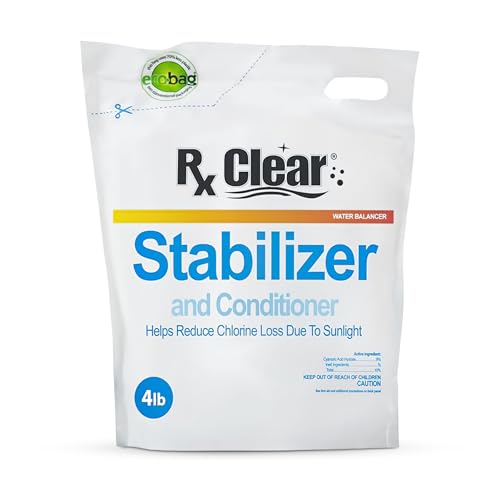
Keep your chlorine from being burned off too quickly by the sun's UV rays. CYA will help you keep a better chlorine reading in your pool.
What to Do If Your CYA Is Too High
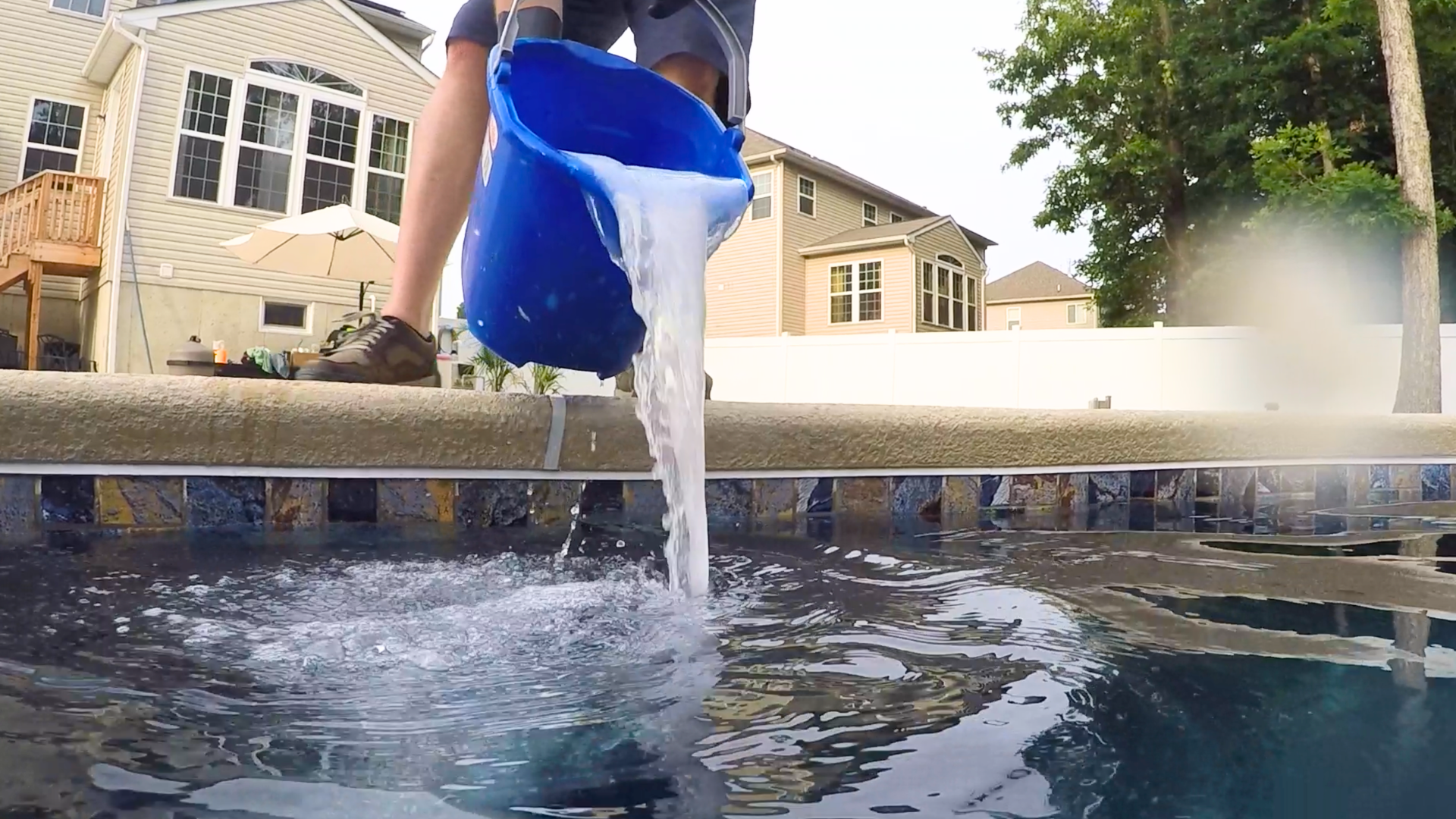
Cyanuric acid doesn’t break down quickly or evaporate, and most pools only lose 10 ppm of CYA each month. The only reliable fix for high CYA is dilution. That means partially draining your pool and refilling it with fresh water. As a rule of thumb, if your CYA is 10 percent too high, remove and replace about 10 percent of your water.
CYA reducers exist, but results are mixed. They work slowly, sometimes taking a week or more, and many pool owners report no real change. For the complete walkthrough, check out our guide on how to lower cyanuric acid.
High CYA is a Common Problem
Because CYA levels naturally rise when you use chlorine tablets, high CYA is a common issue. In a survey of 50 pool owners, 42% reported issues with high CYA levels, compared to only 18% with low CYA levels (Source: Swim University YouTube, June 2026)

This product may work slowly and results can vary, but it's a good option if you can't drain your pool to lower cyanuric acid levels.
Cyanuric Acid in Saltwater Pools
In a traditional chlorine pool, cyanuric acid levels should be between 30 and 50 PPM. In a salt water pool, it’s helpful to keep these levels a bit higher, around 60 to 80 PPM.
Higher CYA helps prevent your salt water generator from working too hard, especially during periods of high sunlight exposure. It can also help extend the life of your salt cell, as it doesn’t need to compensate for the loss of chlorine caused by excessive sunlight.
Remember, the ratio of cyanuric acid and chlorine matters. So with higher CYA levels of 60 to 80 ppm, plan to keep your free chlorine around 4 to 5 ppm.
Test your CYA levels monthly, especially at the beginning of the season, and whenever you add water to your pool. If you’re adding dichlor shock regularly, that will add some CYA to the water. Otherwise, you’ll need to add chlorine stabilizer.
Frequently Asked Questions About CYA
What is the ideal cyanuric acid level for a pool?
Standard chlorine pools should sit between 30 and 50 ppm. Saltwater pools run higher, between 60 and 80 ppm.
How long does it take cyanuric acid to register in pool water?
Granular CYA can take 24 to 72 hours to show up on a test. Don’t add more until you’ve waited it out.
Can you swim in a pool with high cyanuric acid?
Yes, high CYA isn’t a swimmer safety issue. It just reduces how well your chlorine sanitizes the water, which can lead to algae or cloudiness over time. CYA is an acid, so wait 20 to 30 minutes after adding it to the water before swimming to avoid skin irritation.
Does pool shock raise cyanuric acid?
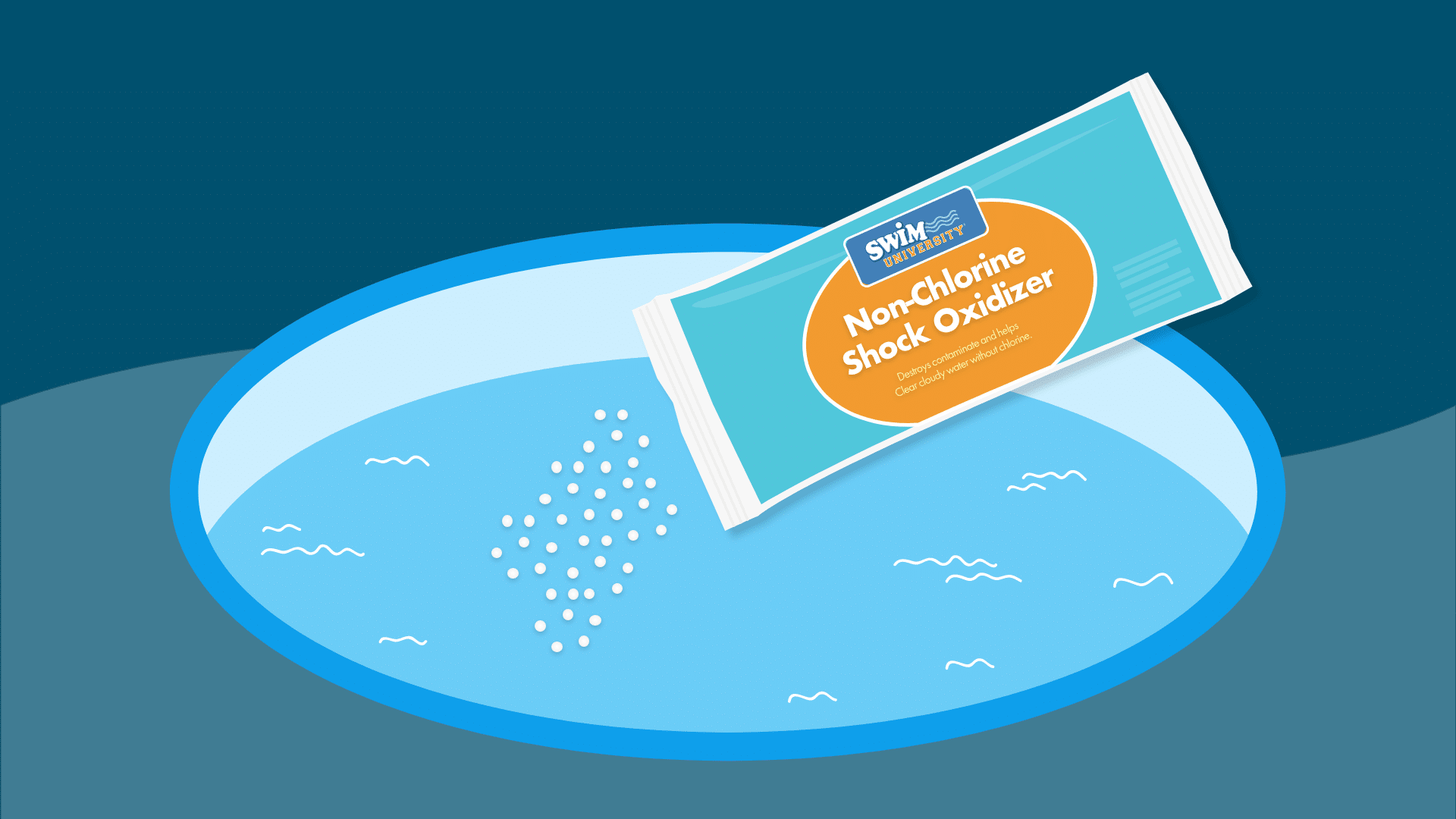
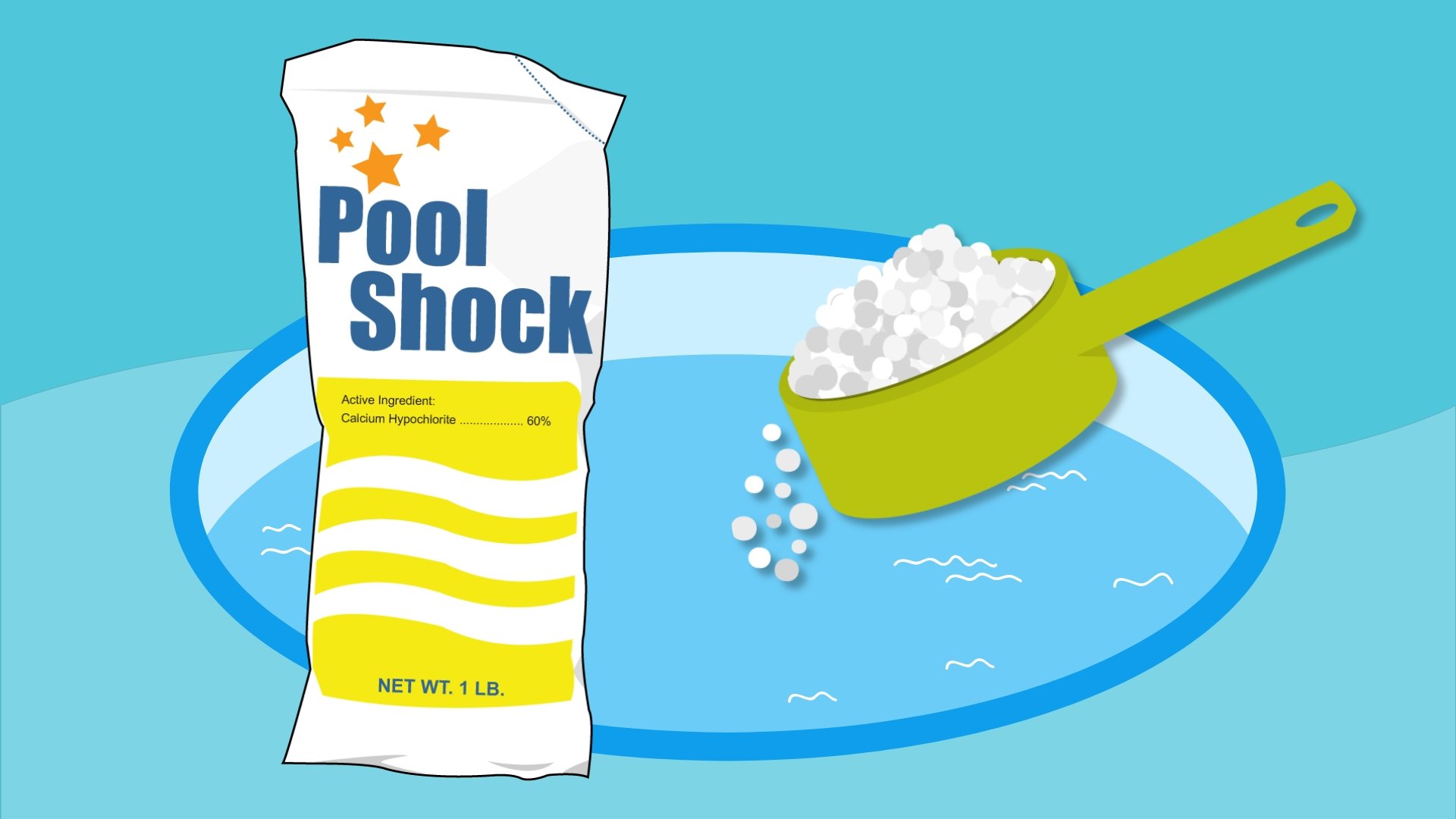
Some shock products, like dichlor shock, contain CYA. Cal-hypo shock, liquid chlorine, and non-chlorine shock do not.
Does baking soda raise cyanuric acid?
No. Baking soda raises total alkalinity, not CYA. The two chemicals do completely different jobs.
How often should you add cyanuric acid to your pool?
If you’re using liquid chlorine or a salt water generator to sanitize your pool, you only need a fresh dose of cyanuric acid once or twice a year, usually at the start of the season. If you’re using trichlor chlorine tablets or dichlor chlorine granules to sanitize your water, these already contain cyanuric acid.
What happens if cyanuric acid is too low?
Your chlorine breaks down quickly in sunlight, leading to chlorine demand and a pool that’s hard to keep sanitized.
What happens if cyanuric acid is too high?
Your chlorine becomes less effective at killing bacteria and algae, even if your test strip shows a normal chlorine reading.
Can you have a pool without cyanuric acid?
Yes, if it’s an indoor pool with no UV exposure or a bromine pool. Outdoor pools need it to keep chlorine from burning off.
Is cyanuric acid safe to swim in?
Yes, at normal levels it’s safe and doesn’t significantly affect pH, alkalinity, or calcium hardness.
How long does cyanuric acid last in pool water?
It doesn’t break down quickly or evaporate. An average pool loses only 10 ppm of cyanuric acid each month. It stays in your water until you dilute it through draining and refilling.
Skip the Math with the Pool Care App
Cyanuric acid is one of the trickier pool chemicals to manage. It lingers in your water for months, and the dosing has to be precise to avoid overshooting your target range.
The Pool Care App tracks your CYA over time and warns you when levels approach the upper limit. It works with any test strip or test kit you already own.
Key Takeaways
- Cyanuric acid, CYA, pool stabilizer, chlorine stabilizer, and pool conditioner are all the same chemical.
- Keep CYA between 30 and 50 ppm for a standard chlorine pool, or 60 to 80 ppm for a saltwater pool.
- Your free chlorine should stay at about 7.5 percent of your CYA level. At 40 ppm CYA, aim for 3 ppm free chlorine.
- Stabilized chlorine products like trichlor and dichlor already contain CYA, so you’re adding it every time you sanitize.
- The only reliable way to lower CYA is to dilute your water through a partial drain and refill.
- Test monthly, and always retest after heavy rain since dilution can drop your CYA level fast.